S4K Fact Sheet
Wearing both sunnies and a broad-brimmed hat can reduce UV rays to the eyes by up to 98% 2.
S4K FACT SHEET
Too much of the sun’s UV radiation can cause short and long-term eye damage. Increased risks of eye damage and skin cancer later in life is strongly associated with damage accumulated during childhood and adolescence 1.
Wearing both sunnies and a broad-brimmed hat can reduce UV rays to the eyes by up to 98% 2.
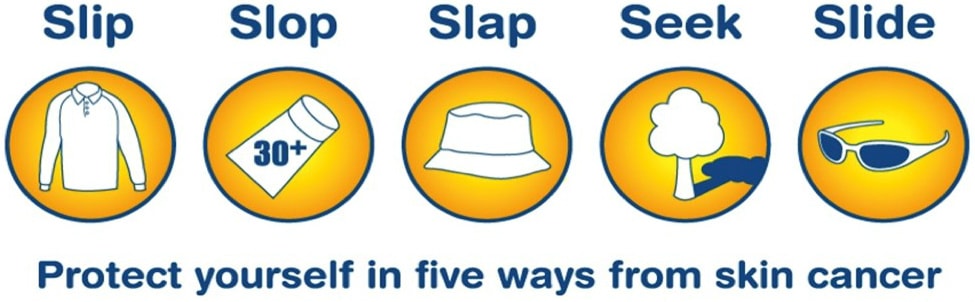
The facts are; when the UV level is 3 or higher, we should follow the 5 sun smart steps
- Slip on clothing ü
- Slop on SPF30 (or higher) ü
- Slap on a hat ü
- Seek shade ü
- Slide on sunglasses ü
How does UV radiation affect children’s eyes?
Short-term problems3;
- Mild irritation
- Photokeratitis (excessive exposure to UV and painful to the eyes)
- Acute photo keratopathy, akin to sunburn of the cornea
- Inflammation
- Excessive blinking
- Photophobia (difficulty looking at strong light).
Exposure to UV radiation over long periods can lead to permanent damage to the eyes, such as3;
- Squamous cell cancers on the conjunctiva (membrane covering the white part of the eye)
- Skin cancer around the eyes and eyelids
- Cataracts (cloudiness of the lens)
- Macular degeneration (damage to the retina)
- Pterygium (an overgrowth of the conjunctiva on to the cornea)
- Climatic droplet keratopathy (or cloudiness of the cornea).
Interesting Facts!
When the UV levels reach 3 or above, a number of sun protection measures should be put in place from September to the end of April4.
- Broad-brimmed hats can reduce UV radiation reaching your eyes by 50% 3
- Wearing both wraparound sunglasses and a broad-brimmed hat can reduce UV rays to the eyes by up to 98% 2
- In a school day or playing sport, children’s eyes can be exposed to UV radiation for up to two hours or more.
UV radiation4:
- UV radiation cannot be seen or felt
- UV radiation can be reflected off surfaces such as buildings, asphalt, concrete, water, sand and snow
- UV radiation can pass through light clouds
- UV radiation varies in intensity across the year (highest in Victoria from September – April)
- UV radiation peaks during school hours
Melanoma diagnosis in Australia is one of the highest in the world, by the age of 70, two in three Australians will be diagnosed with skin cancer. Interestingly, almost all skin cancers are preventable5.
S4K is proud to provide Australian Standard eyewear for children that are;
- Wrap-around, close-fitting sunglasses to reduce reflected solar UV radiation and glare
- Category 3, polycarbonate lenses
- Three sizes that comfortably fit all shapes and sizes for primary school students
- Australian standard for eye protection (AS/NZS 1067.1:2016)
- S4K lenses absorb more than 95% of solar UV radiation to prevent it reaching children’s eyes.
“Our vision is that every child has the opportunity to slide on sunglasses at school or when physically active outdoors, to help reduce UV damage to their eyes”.
References
- https://www.sunsmart.com.au/communities/early-childhood-primary-schools/sample-policies
- https://www.sunsmart.com.au/uv-sun-protection/slide-on-sunglasses
- https://www.sunsmart.com.au/downloads/resources/info-sheets/sunglasses-info-sheet.pdf
- https://www.education.vic.gov.au/school/principals/spag/health/Pages/sun.aspx